The dining guide to Arras · Pas-de-Calais

Where to eat
in Arras?

Every table in the city, in one place: from bistros on the Grand'Place to caterers, cafés and quick bites. Browse by category, find your next meal.
Search
The Arras belfry seen from the Grand'Place
places listed

Browse by category

Four ways to eat and drink in the city.

Places to discover

A selection across the city center and beyond.
No listing published yet.

Two squares, one appetite

Eat around the Flemish squares

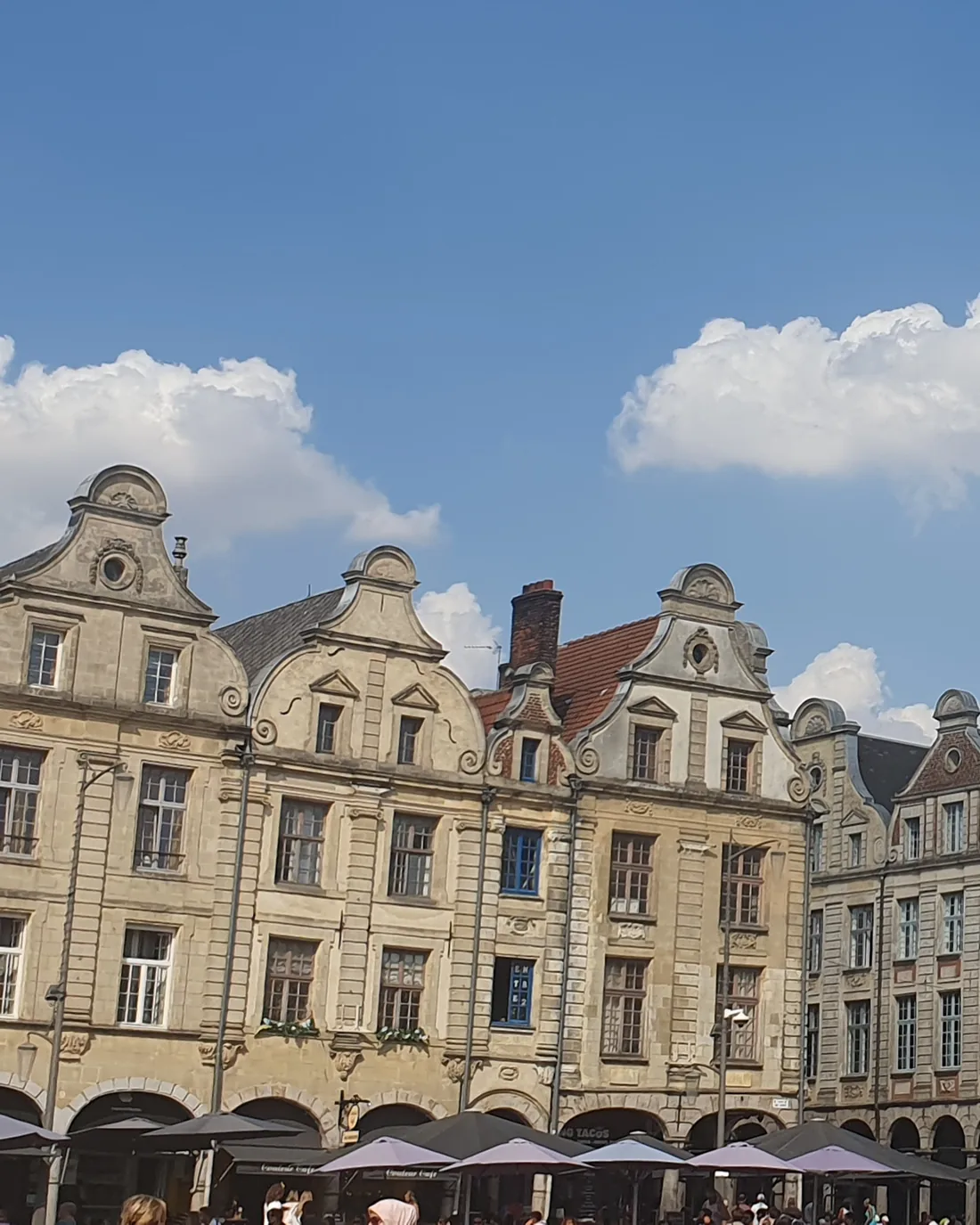
The Grand'Place and the Place des Héros frame the city with their Flemish-Baroque façades, and beneath the arcades, the best terraces in Arras.

Explore the center
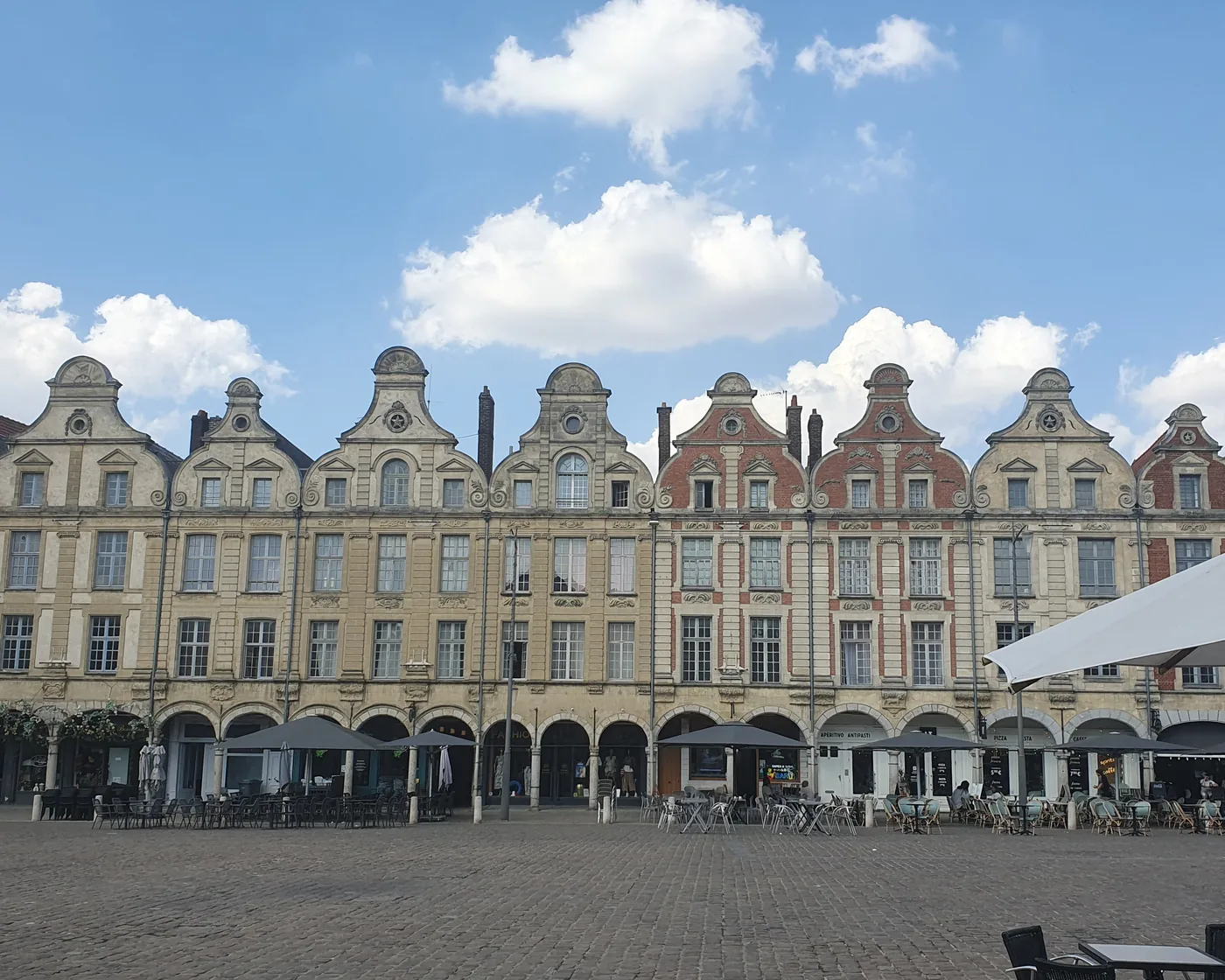
The Grand'Place of Arras seen from the belfry
The story of a city that loves to sit down and eat

In Arras, you don't just eat: you take your time

Some cities you visit camera in hand; others you discover fork in hand. Arras is both. Behind its sandstone-and-brick façades, beneath the arcades of its two great squares, the capital of the Artois has its own way of welcoming you: generous, unfussy, washed down with an amber ale and drawn out until night falls over the belfry.

This guide was born from a simple belief: eating well in Arras should not come down to luck or word of mouth. Between the brasserie on the Grand'Place, the estaminet tucked away down a cobbled street, the neighbourhood pizzeria and the caterer who feeds the big gatherings, the city has hundreds of addresses. You still need to know which one to push open on a rainy evening, which to book for a business lunch, which to take visiting friends to. That is exactly what these pages are for.

Before you browse the listings, let us tell you about Arras the way you'd describe a good meal: in small touches, starting with the setting, then the flavours, the people and the seasons. You won't quite eat the same way once you know what lies behind a plate of carbonnade or an Arras heart sitting on a pâtisserie counter.

75 mthe height of the UNESCO-listed belfry
2Flemish-Baroque squares lined with arcades
155listed façades around the squares
4families of tables to explore in the guide
The Arras belfry rising above the Grand Place and its arcades
The belfry watches over the Grand'Place and its terraces.
The setting

Two squares, a theatre of stone

Few cities offer such a theatrical dining backdrop. The Grand'Place and the Place des Héros, linked by a narrow street, line up dozens of gabled houses with sandstone arcades, inherited from the grain and cloth trade. They are called Flemish-Baroque façades: columns, scrolls, pediments, the same score repeated house after house, like a line of sight towards the belfry.

Beneath these arcades, history has always been a matter of trade and of appetite. Where wheat and herring were once sold, terraces are now laid out. To sit down here, glass in hand, is to eat in a setting that Vauban, Robespierre — a local son — and generations of merchants knew almost unchanged. The cobbles, for their part, have not changed their minds.

When evening comes and the floodlights pick out the lacework of stone, the Place des Héros becomes one of the most beautiful open-air dining rooms in France. That is where an evening of good food in Arras almost always begins.

Nine centuries of hospitality

A city built to welcome

If Arras is so good at pushing the boat out, it is because it has been practising for a very long time. In the Middle Ages, the city was one of the richest in northern Europe: cloth was traded here, coins were minted, money was lent to princes. Merchants from Flanders, Champagne and Italy crossed paths at the great fairs, and they had to be housed, given drink and fed. The two squares, before they were postcards, were marketplaces teeming with life and smells.

From that prosperity the city kept a taste for the world and for the open table. It also gave history a few figures: Maximilien de Robespierre was born here in 1758 and worked as a lawyer before leaving for Paris. A century earlier, Vauban had ringed Arras with a star-shaped citadel so perfect that it was never besieged — it is nicknamed la Belle Inutile, the useless beauty. Today its glacis hosts the crowds of a great festival each summer: the impregnable fortress has become a place of celebration.

Then came the worst. Between 1914 and 1918 Arras found itself on the front line and lost three quarters of its buildings. Beneath the city, miners from New Zealand dug a network of tunnels — the Wellington Quarry — where thousands of soldiers sheltered on the eve of the Battle of Arras. The city came out of the war on its knees.

And yet, from the 1920s onwards, it rose again. Façade after façade, gable after gable, the people of Arras rebuilt their squares exactly as they had been, patient stone against stubborn memory. The setting you admire from a terrace today is a resurrection, a snub to oblivion. Through fairs, sieges, wars and rebirths, one thing never surrendered: the art of welcoming. People eat in Arras as they always have — to be together, and to hold on together.

The taste of the North

What really goes on the plate

The cooking of Arras is Northern cooking: honest, comforting, made for grey winters and cheerful tables. It borrows from Flanders, from neighbouring Picardy and from the Artois soil. A few pillars deserve to be tasted at least once by every visitor, preferably with a local beer and a big cone of fries.

Welsh

Toasted bread drowned in cheddar melted with beer and mustard, often crowned with an egg and a slice of ham. The Northern comfort dish par excellence, served bubbling hot.

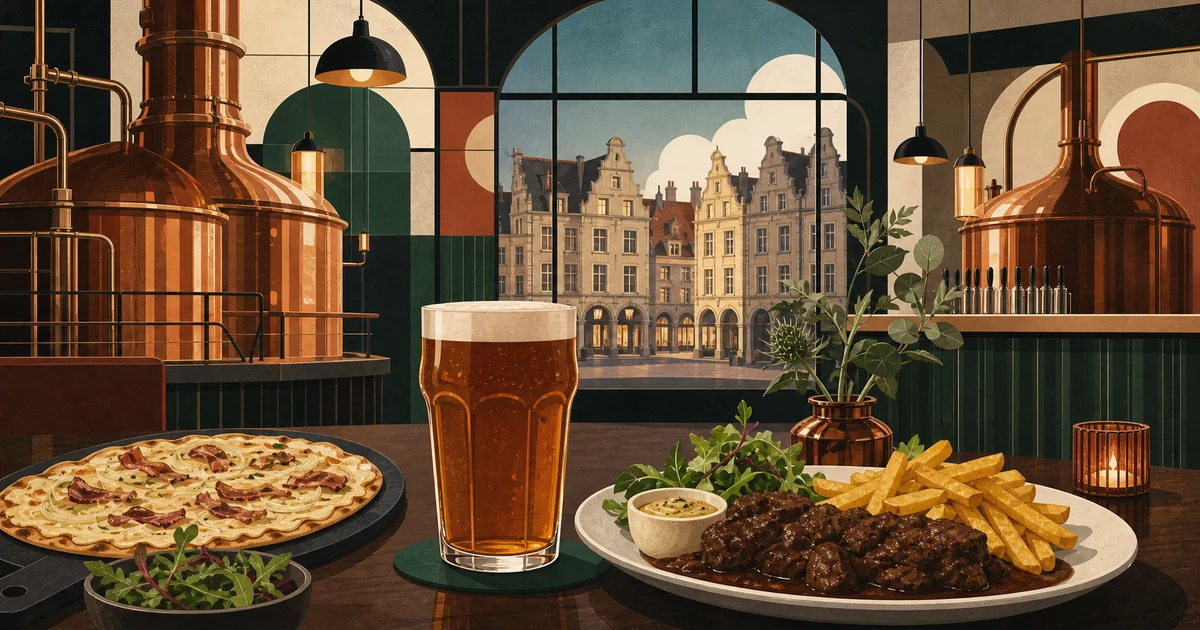
Flemish carbonnade

Beef slowly braised in brown ale, softened with gingerbread and a touch of brown sugar. Homemade sweet-and-savoury, served with fries.

Potjevleesch

A terrine of white meats set in jelly, literally the Flemish 'little pot of meat'. Eaten cold, with fries, as a starter with real backbone.

Around these classics orbits a constellation of pleasures: the maroilles tart that perfumes the whole room, the mussels and fries of fine days, the chicons — our endives — braised or baked with ham, the grilled andouillette the city celebrates every summer. People here eat food that does not try to dazzle, but to fill and to bring together. It is a cuisine of hospitality before it is a cuisine of display.

« In the North we don't have the sun. So we put the sun on the plate. »
The Grand Place of Arras and its gabled houses seen from the belfry
The Grand'Place seen from the belfry, its arcades and its estaminets.
The art of slowing down

Beer, estaminets and tables that linger

Here, beer is not a sideline: it is heritage. The craft breweries of the Hauts-de-France have revived garde blondes, ambers and browns that turn up both at the bar and at the stove, in the sauce of a carbonnade or the melt of a welsh. Ordering a local beer in Arras is already tasting the region.

The estaminet, the traditional café-restaurant of the North, is its temple. You push the door for a slow-cooked dish and you stay for the atmosphere: wooden games, shared tables, walls covered in bygone objects. You don't go there fast; you go there well. This art of slowing down — sitting, chatting, ordering another round — may be the finest Arras speciality of all, the one that appears on no menu.

From the city-centre wine bars to the neighbourhood cafés, from the micro-breweries to the terraces of the squares, the city knows how to make pleasure last. This guide files all these addresses under a single family: the one you go to as much for a drink as to put the world to rights.

The sweet side of Arras

Hearts, rats and a stubborn sweet tooth

It is impossible to tell the story of Arras without its sweets, for the city has made pâtisserie and chocolate a signature. Two emblems compete for the shop windows, and you should know them before you leave.

The Arras heart actually comes in three delicious forms, which makes it a tasty curiosity. First it is a heart-shaped gingerbread biscuit made with white honey, which appeared in the late seventeenth century. It is also, in its modern version, a dark chocolate heart filled with a smooth Madagascar vanilla ganache. And it is, on the cheese side, a heart-shaped cheese cousin to the maroilles, ripened in a cellar. Three hearts for one city: it is hard to be more endearing.

Then comes the mischievous Arras rat: a little rat moulded in chocolate and filled with praline, a wink at a nickname the people of Arras have carried for centuries. Behind the joke lies a real chocolate-making tradition the city has kept alive since the Middle Ages. You give a box of them the way you give a piece of Arras itself.

And since we are on local pride, a word about the Arras andouillette, made from pork and veal, minced and seasoned with spices, which the city honours every August at a festival of its own. Cooked on a string, coated in a mustard or white-wine sauce, served with fries: it is the savoury answer to the sweet, and proof that here, indulgence is celebrated in public.

Gingerbread heart, chocolate heart, cheese heart, andouillette and praline rat: the little edible people of Arras.
The calendar

The seasons of the Arras table

In Arras you don't eat the same thing all year round, and you don't eat in the same place. The city lives to the rhythm of its markets and its big events; knowing its calendar is already knowing when to book.

Wednesday and Saturday mornings, all year

The market spreads across the two squares, one of the largest in the region. Artois market gardeners, cheesemongers, seafood from the coast: it is the city's open-air larder, and the best moment to understand what the kitchens will put on their menus.

Spring, the terraces open

As soon as the first fine days arrive, the arcades fill with chairs and parasols. It is the season of lunches that stretch on, of mussels and fries and aperitifs that slide into dinner without anyone noticing.

Early July, the Main Square Festival

On the edge of the Vauban citadel, the great contemporary-music festival fills the city. Tables are booked weeks ahead: this is when Arras buzzes hardest, and when people eat late.

August, the andouillette festival

The charcuterie speciality gets its own celebration. Grill smoke, mustard sauces, a funfair spirit: indulgence takes to the street.

December, the Christmas market

One of the finest in the North lights up the Grand'Place. Mulled wine, tartiflette, waffles and food chalets: the city turns into a huge winter table, and the central restaurants are fully booked.

The edible geography

Neighbourhood by neighbourhood, where to set down your fork

Eating in Arras is not only about choosing a dish: it is about choosing a mood, and each neighbourhood has its own. This guide covers the historic centre as well as the outskirts and the neighbouring towns of the urban community.

The historic heart and the two squares

This is the shop window: brasseries under the arcades, fine-dining tables in vaulted cellars, terraces facing the belfry. You come for the experience as much as for the plate, for a polished business lunch or a dinner that marks a stay. The streets radiating from the squares — towards the theatre, towards Saint-Vaast — hide more confidential addresses, often the most endearing.

Around the station and the new district

Ten minutes' walk from the centre, the station area lives to the rhythm of travellers and regulars. Here you'll find quality fast food, pizzerias and world cuisines, perfect for an efficient meal before catching the train to Lille or Paris.

The suburbs and the CUA ring

Beyond the centre, the suburbs and the towns of the Arras urban community hold fine surprises: family tables, caterers who delight receptions, terroir addresses worth the trip. That is often where the best value-for-generosity is hiding, far from the crowds of the squares.

From field to fork

A terroir just behind the city

If people eat well in Arras, it is also because the countryside begins at the edge of the cobbles. The Artois is a generous farming land, and the city's best tables draw on this nearby larder.

Here grow the chicons — the Northern endive, grown away from the light —, the potatoes that will become fries, the cereals of the great plains. The market gardeners of the Arras ring supply the markets and, more and more, the kitchens directly. Cheesemakers ripen maroilles and its cousins in patient cellars; brewers set up their vats a few kilometres away. The Opal Coast, meanwhile, is only an hour away: fish and mussels arrive fresh on the stalls.

This closeness changes everything on the plate. It lets restaurateurs work with seasonal produce, shorten supply chains, tell a local story rather than roll out an interchangeable menu. When you see, on a listing in this guide, a mention of fresh seasonal cooking or a slate that changes every week, remember: it is that terroir speaking.

A little glossary

Speaking the language of Arras food lovers

The North has its own table vocabulary, tasty and vivid. Here are a few key words so you can order without hesitation and understand what lands on your plate. Open each word for its definition.

Estaminet

The traditional café-restaurant of the North, warm and unpretentious, where you share slow-cooked dishes, local beers and wooden games. More than a place, a way of life.

Chicon

The Northern name for endive, grown away from the light. Eaten raw in a salad, braised, or baked with ham and béchamel — the famous chicon gratin.

Welsh

A slice of bread drowned in cheddar melted with beer and mustard, often topped with an egg and ham. The ultimate comfort of cool evenings.

Flemish carbonnade

Beef slowly braised in brown ale, softened with gingerbread and brown sugar. The archetype of the Northern dish, tender and fragrant.

Potjevleesch

Literally the 'little pot of meat': a terrine of white meats set in jelly, served cold with fries. A starter with character.

Cassonade

The brown sugar of the North, at once caramelised and vanilla-like. Sprinkled on waffles, slipped into sauces: the region's typical sweet touch.

Ducasse

The North's popular funfair. On ducasse days the city smells of hot waffles and candy floss: indulgence turns into a fête.

Cone of fries

Served from their kiosk, golden and crisp, fries are eaten from a cone, coated in the sauce of your choice. A Northern institution in its own right.

A table for every mood

With family, with a partner, with colleagues

You don't choose the same address depending on who is with you. Here is how this guide helps you get it right, whatever the occasion.

With family

Traditional tables and brasseries, with their spacious rooms, terraces and menus that please young and old, are safe bets. Look for the addresses that welcome groups and offer dishes to share.

With a partner

The vaulted cellars of the centre and the more intimate tables, away from the bustle of the squares, are the ideal setting for a dinner for two. The atmosphere described on each listing helps you spot the places suited to a tête-à-tête.

For a business lunch

Careful service, a calm setting, an efficient set lunch: several central tables tick every box. The neighbourhood and price range, shown on the listing, let you choose without any surprises.

With friends, in the evening

Lively estaminets, wine bars, places where you linger after the meal: the bars-and-cafés family is the one to explore. You go there for the atmosphere as much as for the plate.

For an event

Birthday, wedding, company reception: the caterers of the Arras ring know how to delight big gatherings. The guide's dedicated category brings together those who come to you.

A day in Arras

From the first coffee to the last drink

The best way to grasp the food culture of Arras is still to follow a whole day, from the belfry's waking to its sleeping. Here is ours — feel free to redo it at your own pace.

In the morning, you settle on a terrace under the arcades, a coffee and a pastry before you, while the city wakes up. On Wednesdays and Saturdays you head instead between the market stalls: a juice from the Artois orchards, a piece of cheese to try, a few vegetables for later.

At midday, it gets serious: the dish of the day in a city-centre bistro, a bubbling welsh or a carbonnade depending on the mood of the sky, and of course a cone of fries. You eat well; you don't count the minutes.

In the afternoon a sweet break calls. Head to a pâtisserie for an Arras heart, a bar of chocolate or a box of praline rats to take home. Here, indulgence travels and is meant to be given.

At aperitif time, you push the door of an estaminet or a wine bar: a garde beer or a glass from the region, a board to share, and the conversation settles in. When evening comes, you dine in a vaulted cellar or a lively brasserie, before one last drink on a floodlit square. In Arras, a day of good food never really ends: it simply pauses until tomorrow.

Heritage on the plate

Eating between two wonders

In Arras you never sit down to eat far from a monument. The meal slips in between two visits, and that may be its greatest luxury: to follow a masterpiece with a good dish without leaving the neighbourhood. Here is how to pair discovery with the fork.

Start with the belfry, rising above the town hall in flamboyant Gothic style. Its 75 metres, listed as UNESCO World Heritage among the belfries of Belgium and France, can be climbed to take in the whole city at a glance — and to spot, from above, the terrace where you'll have lunch. On the way down, the carillon walks you to the first table.

Carry on towards the Saint-Vaast abbey, a vast classical complex that now houses the fine-arts museum, and the neighbouring cathedral. A morning of culture calls for a quiet lunch: the surrounding streets are full of addresses where you can catch your breath after the vaulted halls. Those drawn to remembrance will then descend into the Wellington Quarry, the tunnels dug by New Zealand miners during the First World War; the moving visit happily continues over a comforting dish.

At the edge of town, the Vauban citadel — the famous Belle Inutile — and its Wall of the Shot remind you that Arras heritage is not only a matter of soft stone and gilding. After a walk on the glacis, a garde beer on a terrace closes the loop. Here, history and good food never compete: they trade lines.

When the party comes to you

Caterers: the table that travels

There is one family in this guide that people often forget and which, nonetheless, saves many a big day: the caterers. When a celebration gathers too many people for a restaurant room, or takes place at home, in a village hall or a company, they are the ones who bring the cooking — and often the Arras know-how with it.

Wedding, christening, birthday, communion, company reception, standing dinner or country buffet: the caterers of the Arras ring cover every occasion. Many draw on the Artois terroir to compose refined cocktail bites, generous buffets and revisited Northern dishes, from potjevleesch in a verrine to carbonnade simmered for a hundred covers. The good news is that Northern generosity scales beautifully to a big gathering.

Choosing the right caterer is first a matter of planning ahead. Specify the number of guests, the desired style — seated or standing, smart or relaxed —, the budget per person and any dietary constraints, then contact the professional well in advance: the best are booked months before the event, especially in the height of the wedding season. The guide brings together these reception craftspeople to help you find, close to you, the one who will turn your day into a tasty memory.

How to use it

How to read this guide

This site was designed to save you time and win you good meals. Here is how to make the most of it; open each panel to learn more.

Four families of tables, four colours

We sort establishments into four broad categories: traditional dining (bistros, brasseries, terroir tables), quick bites (street food, pizza, burgers), bars and cafés (wine bars, estaminets, licensed premises) and caterers (receptions, events). Each category has its colour so you can spot it at a glance, on the home page as on the listings.

Detailed listings, with a map and practical info

Each address has an enriched listing: description, cuisine type, neighbourhood, price range, and a map to locate it without getting lost in the lanes. We describe the atmosphere and the strong points so you know, before you push the door, whether the place is your kind of place.

Search and filters

At the top of the home page, a search field lets you find an address by its name, its cuisine or its neighbourhood. The category filters refine the selection in one click. The idea: to go from craving to address in a few seconds.

Reviews, yes, but real ones

The listings have a review space to share your experience. We never publish fake reviews: it is illegal, and above all contrary to the spirit of this guide. What you read comes from real people, after moderation.

Do you run an establishment?

If your restaurant, bar, fast-food outlet or catering service is in the Arras urban community, you can list it for free from the dedicated page. The listing is created and then published after review. A paid option lets you add a link to your website and a featured placement.

Frequently asked

Everything people ask us about eating in Arras

What is the culinary speciality of Arras?

Arras has not one but several signatures. On the savoury side, the Arras andouillette, celebrated every summer, and the great Northern classics: welsh, Flemish carbonnade, potjevleesch. On the sweet side, the Arras hearts (in gingerbread, chocolate or cheese) and the Arras rats, little chocolate rats filled with praline. It is this diversity, straddling savoury and sweet, that makes the city's food identity.

Where can I eat on the Grand'Place or the Place des Héros?

The two squares concentrate brasseries, terraces and tables set under the arcades. It is the dream spot for a meal in a heritage setting. Browse the guide's traditional-dining category and look for the addresses whose neighbourhood shows the centre or the squares: you'll find both lively brasseries and more intimate tables in vaulted cellars.

Can you eat well in Arras on a small budget?

Yes, very well. Quality fast food, pizzerias and world cuisines, particularly around the station, offer tasty meals at gentle prices. Many traditional tables also have good-value set lunches during the week. Each address's budget is shown on its listing, from the most affordable to the most upscale.

Do I need to book ahead?

For a weekend dinner, during the Christmas market or the Main Square Festival, booking is strongly recommended: the centre fills up fast. During the week, lunch is more relaxed. When in doubt, a simple call to the establishment will confirm availability and current opening hours.

Are there vegetarian options in Arras?

More and more. While Northern cuisine is known for its meat dishes, many addresses now offer salads, vegetarian dishes, baked chicons, pizzas and world cuisines that give pride of place to vegetables. The listings state the cuisine type to help you choose.

When are the Arras markets?

The big market is held on Wednesday and Saturday mornings on the Grand'Place and the Place des Héros. It is one of the largest in the region and the best place to discover the Artois terroir before choosing your table.

How do I get to Arras and get around once there?

Arras is served by high-speed train, about fifty minutes from Paris and twenty from Lille, with a station a few minutes' walk from the centre. On site, the historic heart is easily explored on foot; car parks let visitors coming by car park near the squares.

Is this guide free and independent?

Yes. Browsing the listings is entirely free, and listing an establishment in the Arras urban community is free too. The guide is independent: it lists and presents the addresses, without being a booking service or an agent of the establishments mentioned.

So, where shall we eat tonight?

From the bistros of the Grand'Place to the caterers of the Arras ring, by way of the cafés and quick bites, every table in the city is waiting for you in the guide.

Explore the places

Own a place in Arras?

List your restaurant, bar, fast food or catering business for free and reach every diner searching in the city.

Premium listing
Contact us
✓ Direct link to your website
✓ Featured in your category
✓ “Recommended” badge

Enabled after the listing is approved, invoiced.